A daily IP blocklist with every decision explained
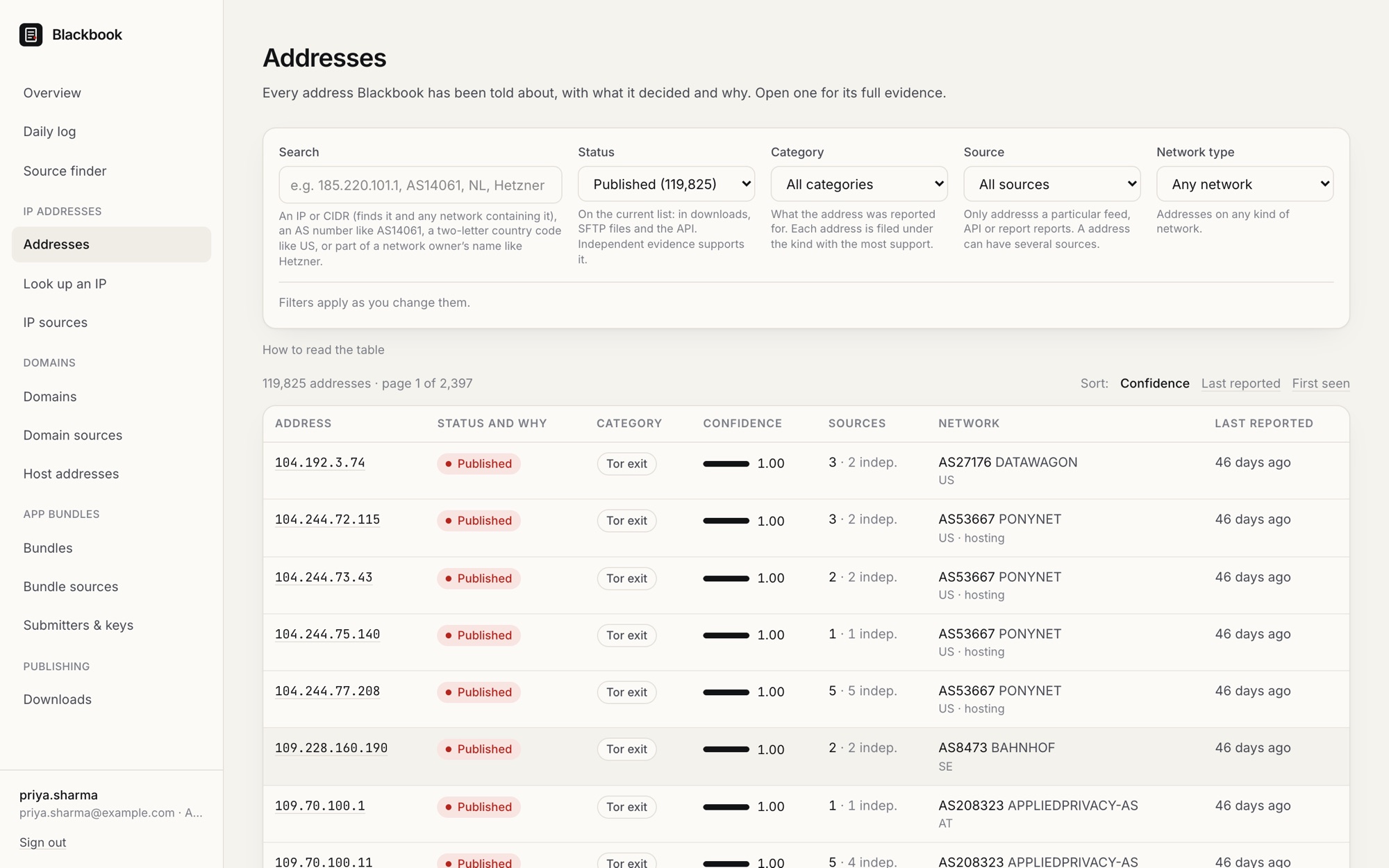
Blackbook collects fraud, spam and attack IP addresses every day from public threat feeds, threat-intelligence APIs and published security research. It only publishes an address when independent sources agree, keeps known-good infrastructure such as CDNs, search crawlers and public resolvers off the list, and explains each verdict in plain language before shipping a frozen daily release.
The problem
Raw threat feeds disagree, go stale and list shared infrastructure, so teams either block real users or cannot say why an address was blocked.
What it does
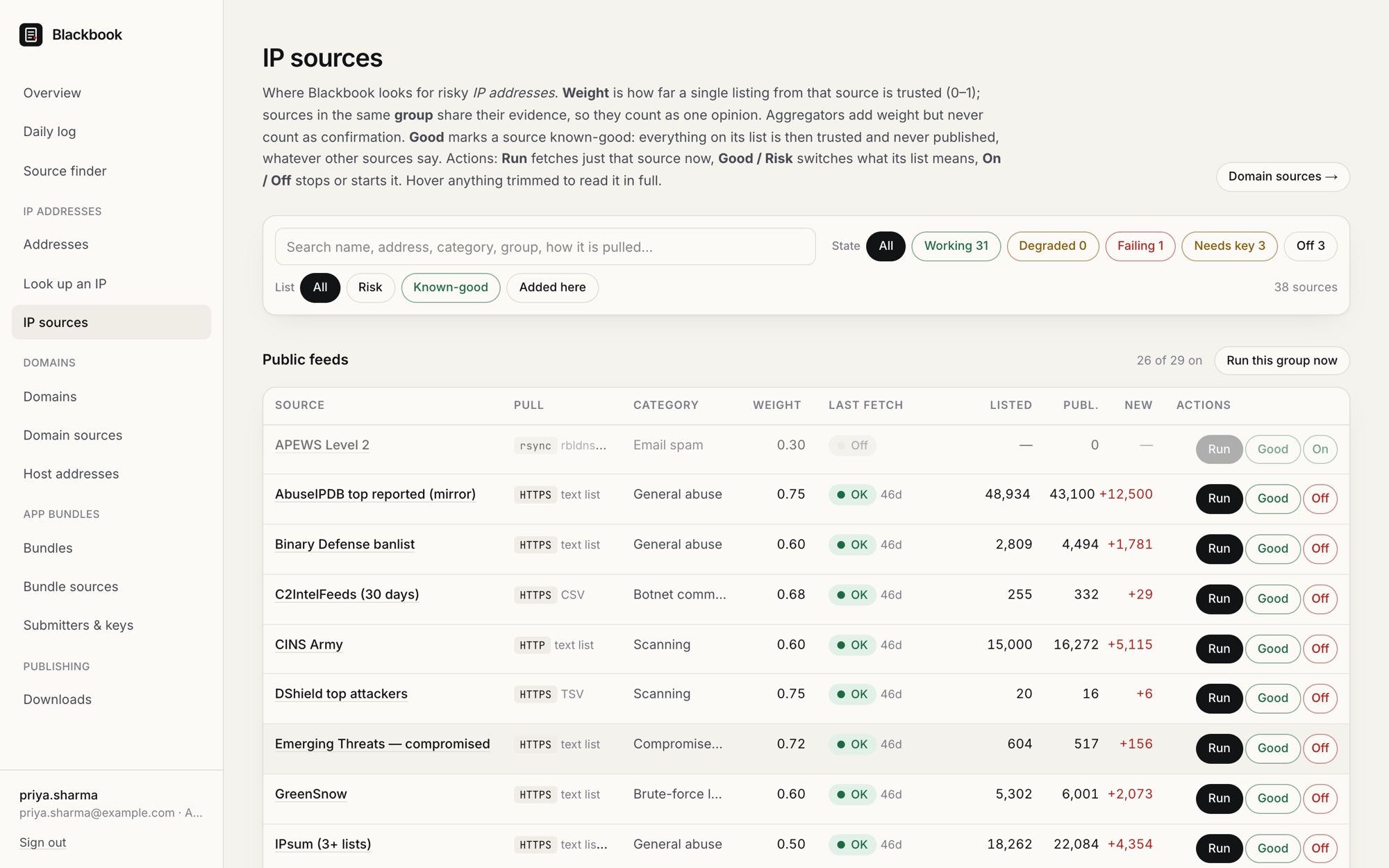
Each source carries a weight and sources in the same group count as one opinion, so an address needs independent agreement before it is published; the rest is held for a second opinion.
Ranges published by Cloudflare, Fastly, Google, Bing, AWS, Azure, public resolvers and others are refreshed daily and kept off the risk list.
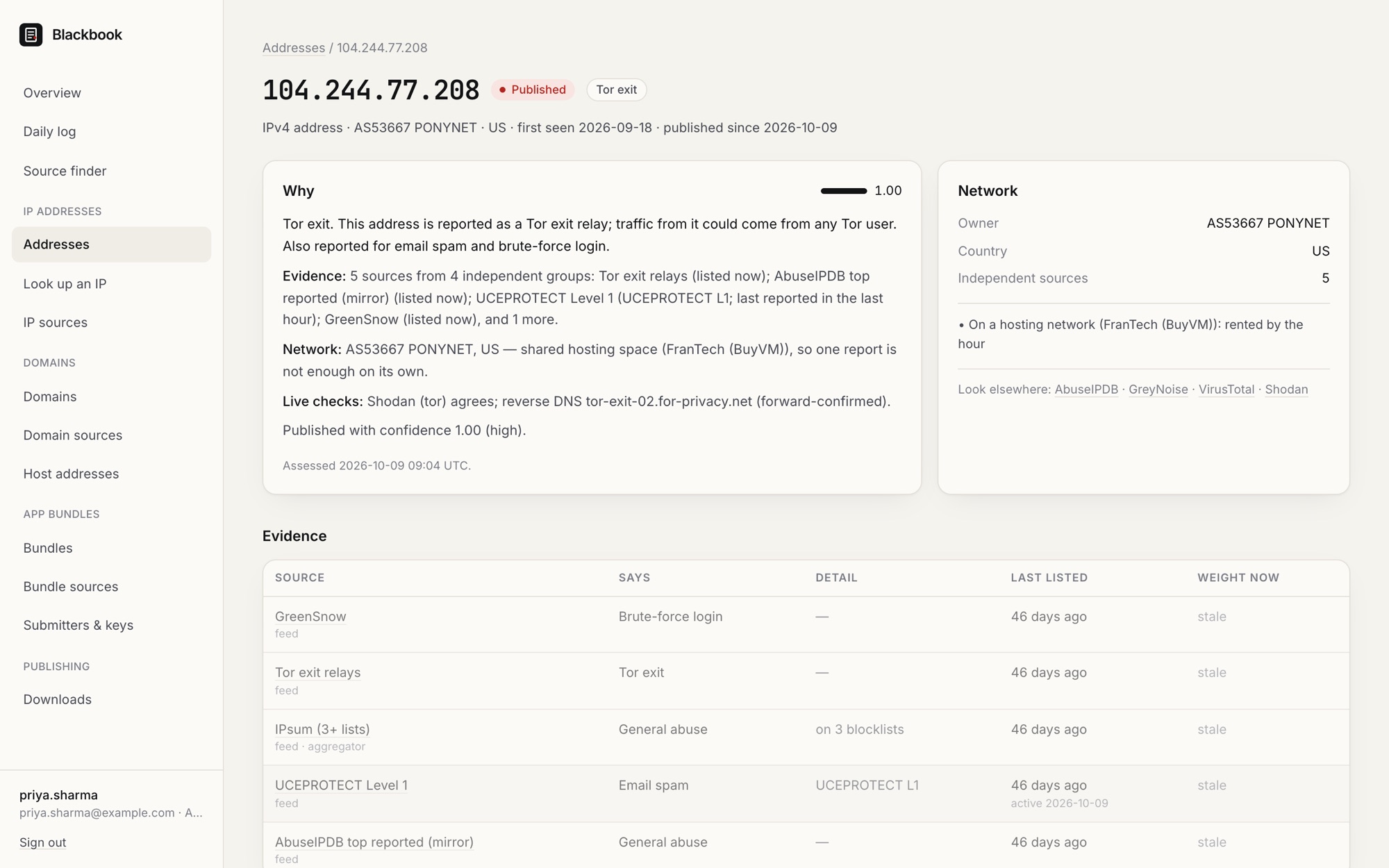
Every address shows why it was listed: the sources, the network owner, live checks such as forward-confirmed reverse DNS and Shodan, and its confidence.
A release that is empty, loses too many sources or changes beyond set limits waits for a person to publish or reject it.
Download text, CSV, JSON or MRC-style GIVT/SIVT lists, pull with an API token or rsync, or have releases pushed to SFTP servers with pinned host keys.
Separate pipelines track risky domains and app bundles with their own sources, schedules and releases.
How it works
Each day, refresh known-good ranges and collect from every enabled source.
Add network owner and country, then assess each address against independent evidence.
Run live checks on new and held addresses.
Freeze a release, gate big changes for review, and deliver by download, API, rsync or SFTP.
An MCP endpoint lets agents check an IP, search indicators, export lists, read and decide on releases, start runs, manage sources and the allowlist, and push deliveries.
We will show it on your own use case and how it joins the rest of the suite.
Talk to us