Customer questions answered with the evidence attached
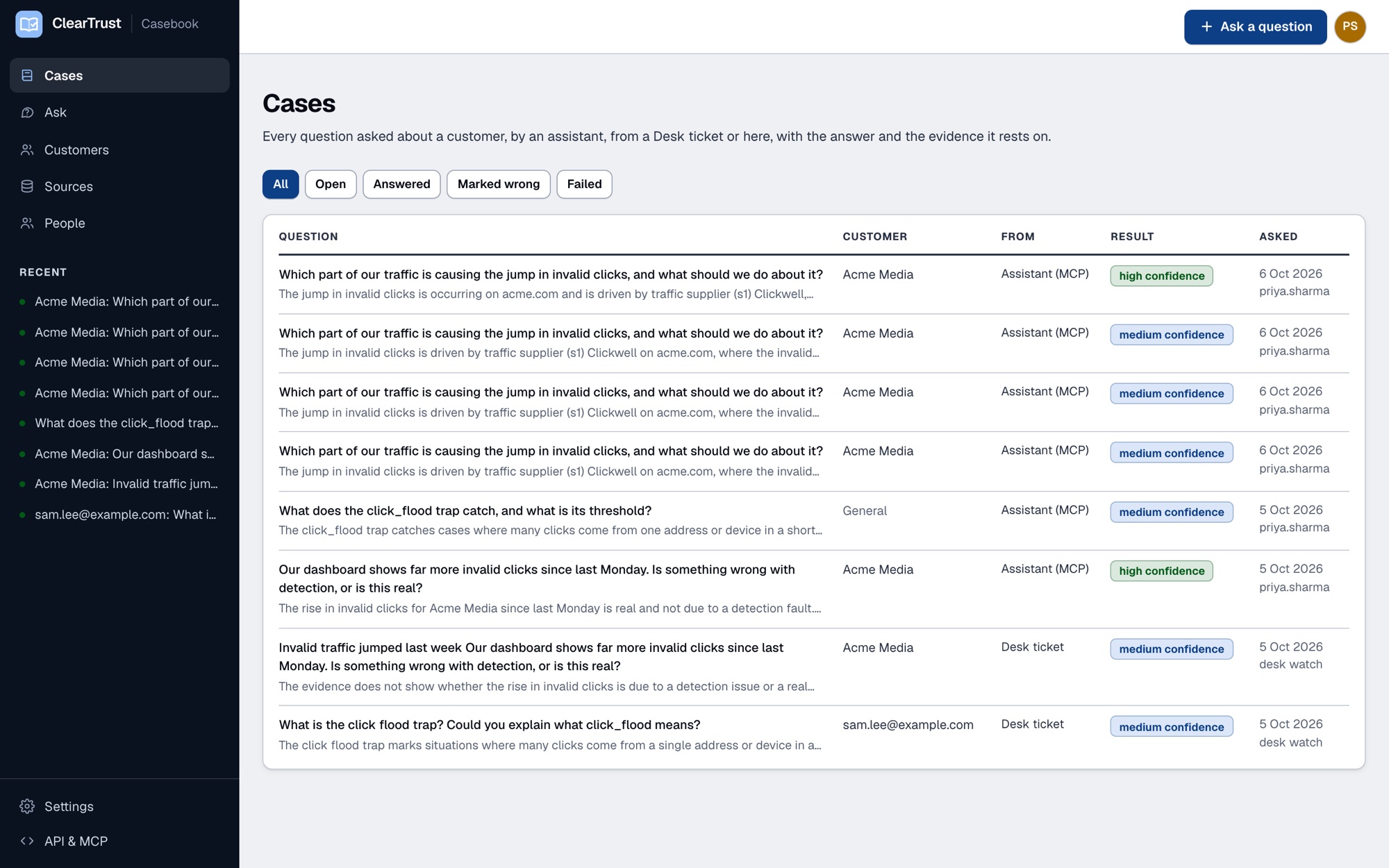
Casebook answers support questions about a specific customer by reading what bears on them: who they are from the Data Room, their own traffic and trap data from the ClearTrust MCP, and documents from Folio. Every point in an answer cites its evidence, and any point or figure that cannot be traced back is removed before the answer is returned.
The problem
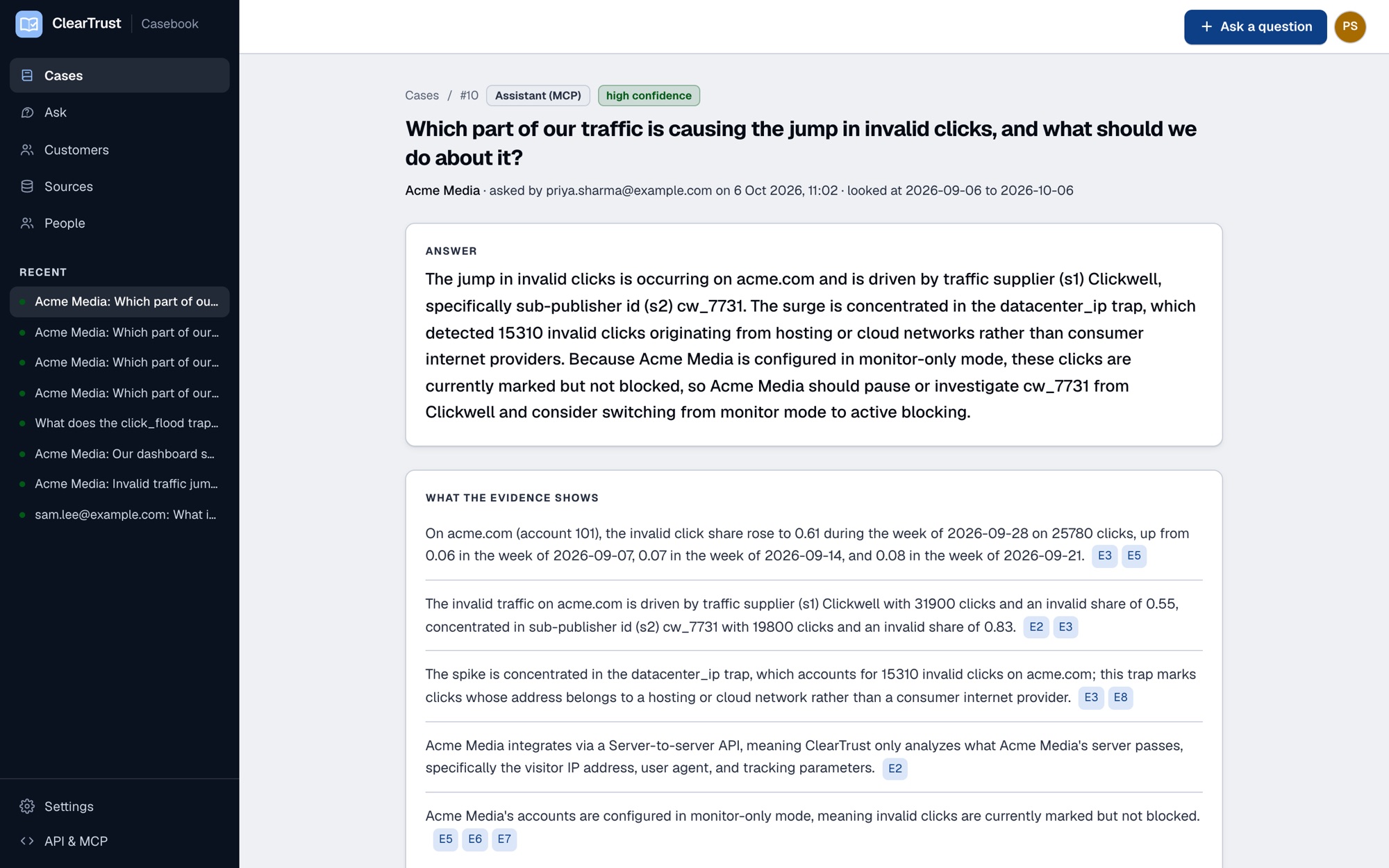
Answering "why did our invalid traffic jump?" means an engineer pulling data from several systems by hand, and a quick AI answer cannot be trusted when its numbers may be made up.
What it does
Each finding cites evidence ids, and any figure not present in its cited evidence is dropped and listed on the case.
Only a customer's saved business ids are queried; calls naming another id are refused and other customers' rows are discarded.
Only read tools are called on a customer's data; tokens are sealed with AES-256-GCM and only a hint is ever shown.
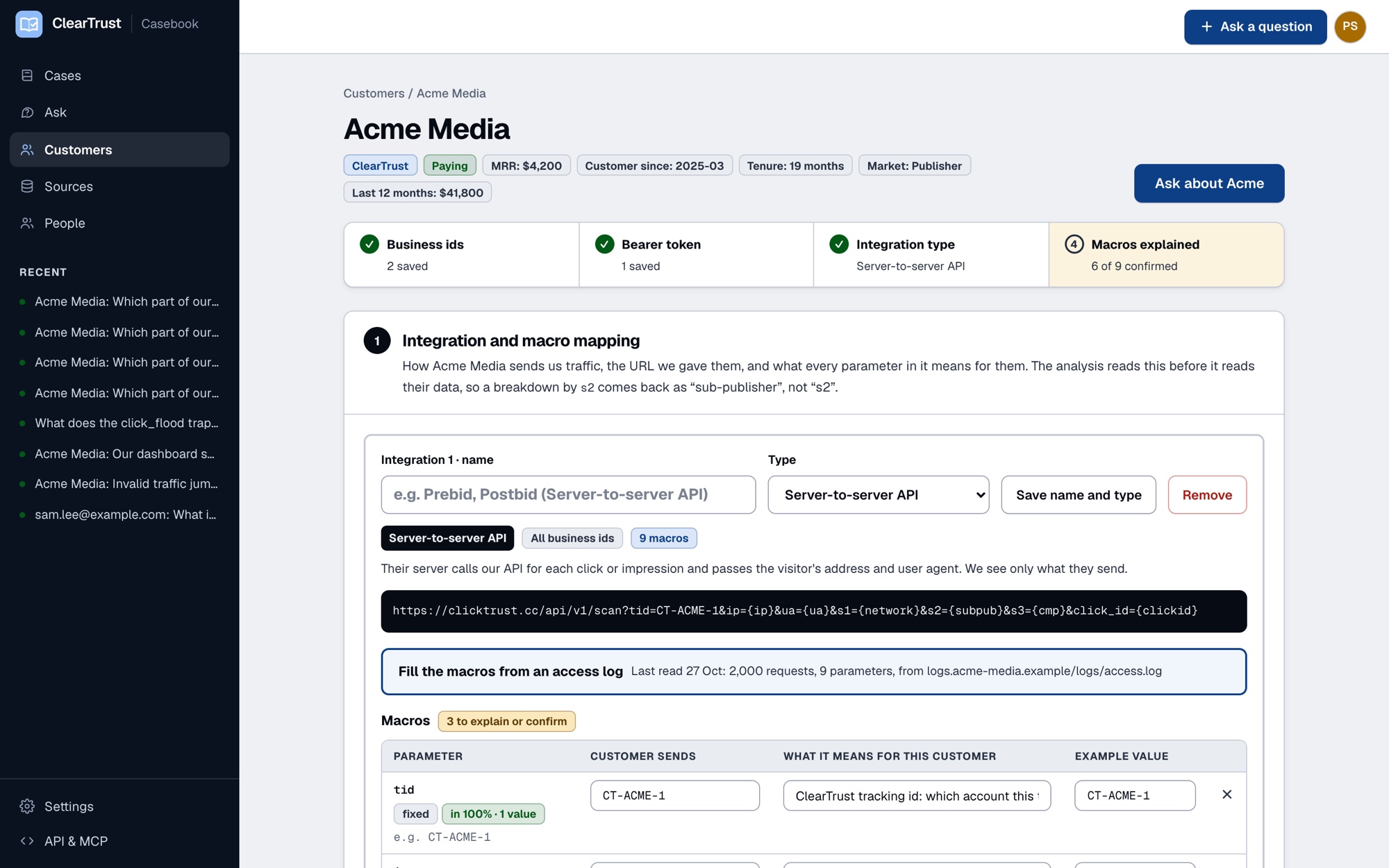
Each customer's integration type and tracking URL parameters are recorded, and can be filled from an access log, so answers use the customer's own terms.
An assistant over MCP, a REST call, the Ask page, or Desk tickets, where the analysis is posted as an internal note.
Answers go straight back to whoever asked and are marked right or wrong later; a wrong answer is never reused.
How it works
A question arrives with a customer name, from an assistant, a person or a Desk ticket.
Casebook matches the customer, or returns candidates rather than guessing.
It plans read calls against the customer's data and finds relevant Folio documents.
A writer drafts the answer, the verifier strips anything unsupported, and the case is stored with its evidence.
Signed in through Central, so the same people and permissions carry across.
MCP endpoint (discover, execute) with question.ask, case.get, cases.list, customers.find and customer.get, plus REST POST /api/ask with the same bearer key.
We will show it on your own use case and how it joins the rest of the suite.
Talk to us