Cordon

Contain a live attack in seconds, not hours

Cordon is a last line of defence for Linux servers and Kubernetes that assumes the perimeter has already failed. A small Python agent watches each host's real resource signature and, the moment a red line is crossed, freezes the offending process, cuts its network and locks the files it touches, while any destructive step waits for a one-click human approval routed down your escalation path.
For
SRE, security and platform teams
cordon.cleartrust.cc
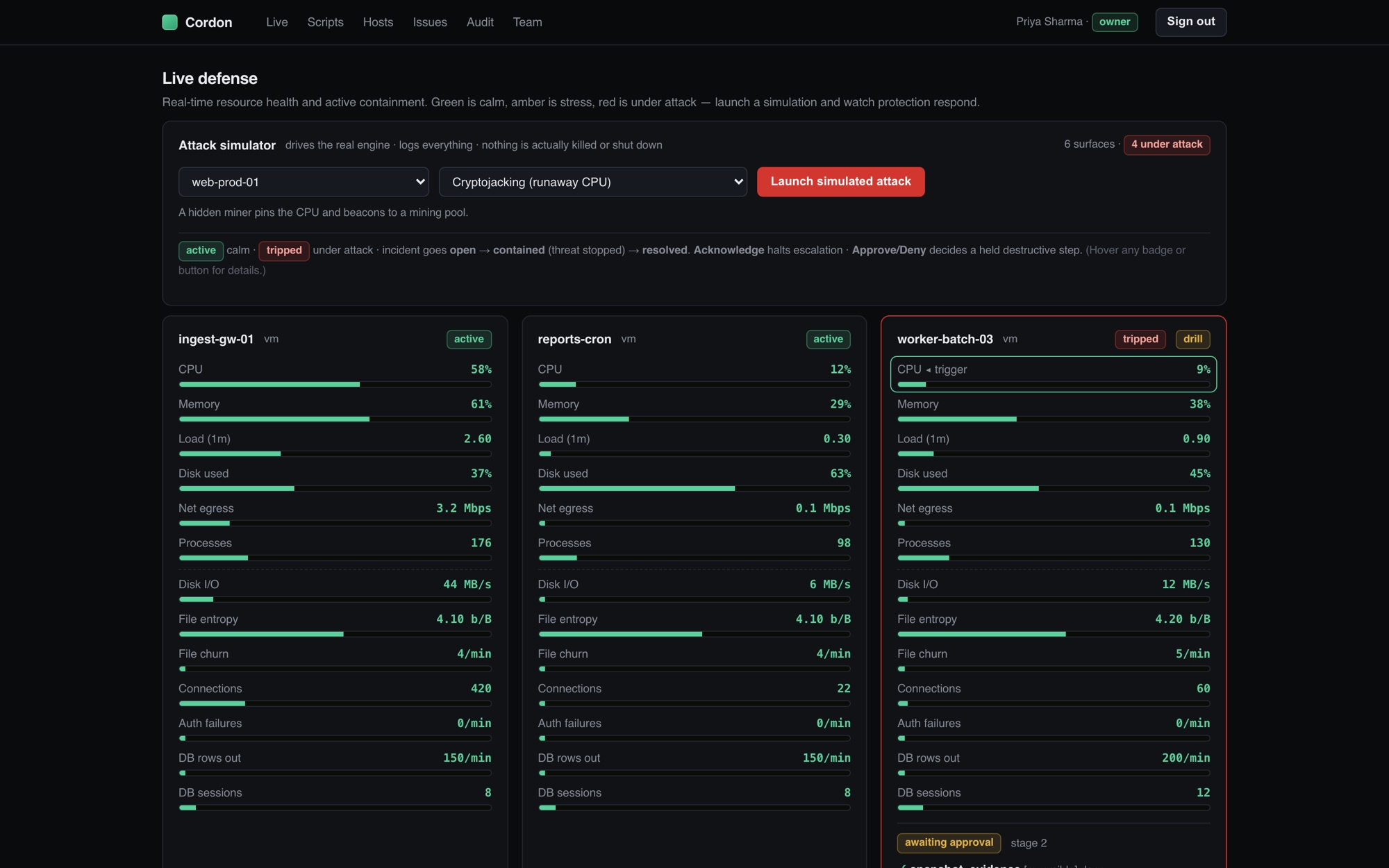
Cordon: Live defence: every host's resource health, with tripped hosts and held approvals
Live defence: every host's resource health, with tripped hosts and held approvals
The problem

When ransomware, a miner or a data theft gets past prevention, most stacks keep alerting while the damage runs and nobody is paged until it is too late.

What it does

What Cordon gives you

Reversible steps run instantly

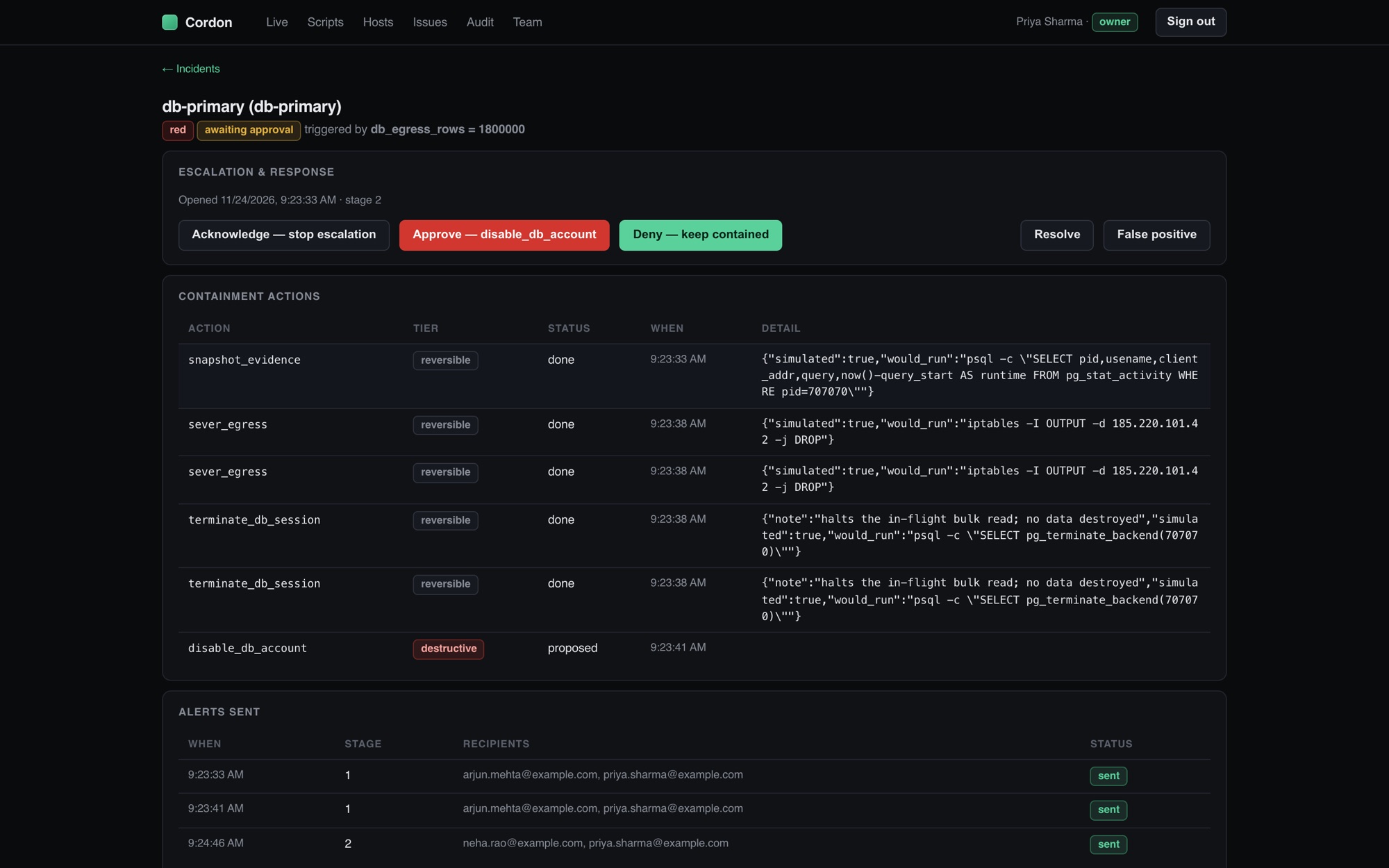
Evidence snapshot, process freeze, egress cut, file lock and decoy swap run on their own because each can be undone.

Destructive steps need a person

Kill, shutdown or disabling a database account are proposed and held for an approve or deny, with hold as the default on timeout.

Escalation paths

Alerts climb ordered stages of teams until someone acknowledges, and only responders or above can approve.

Tamper-evident audit

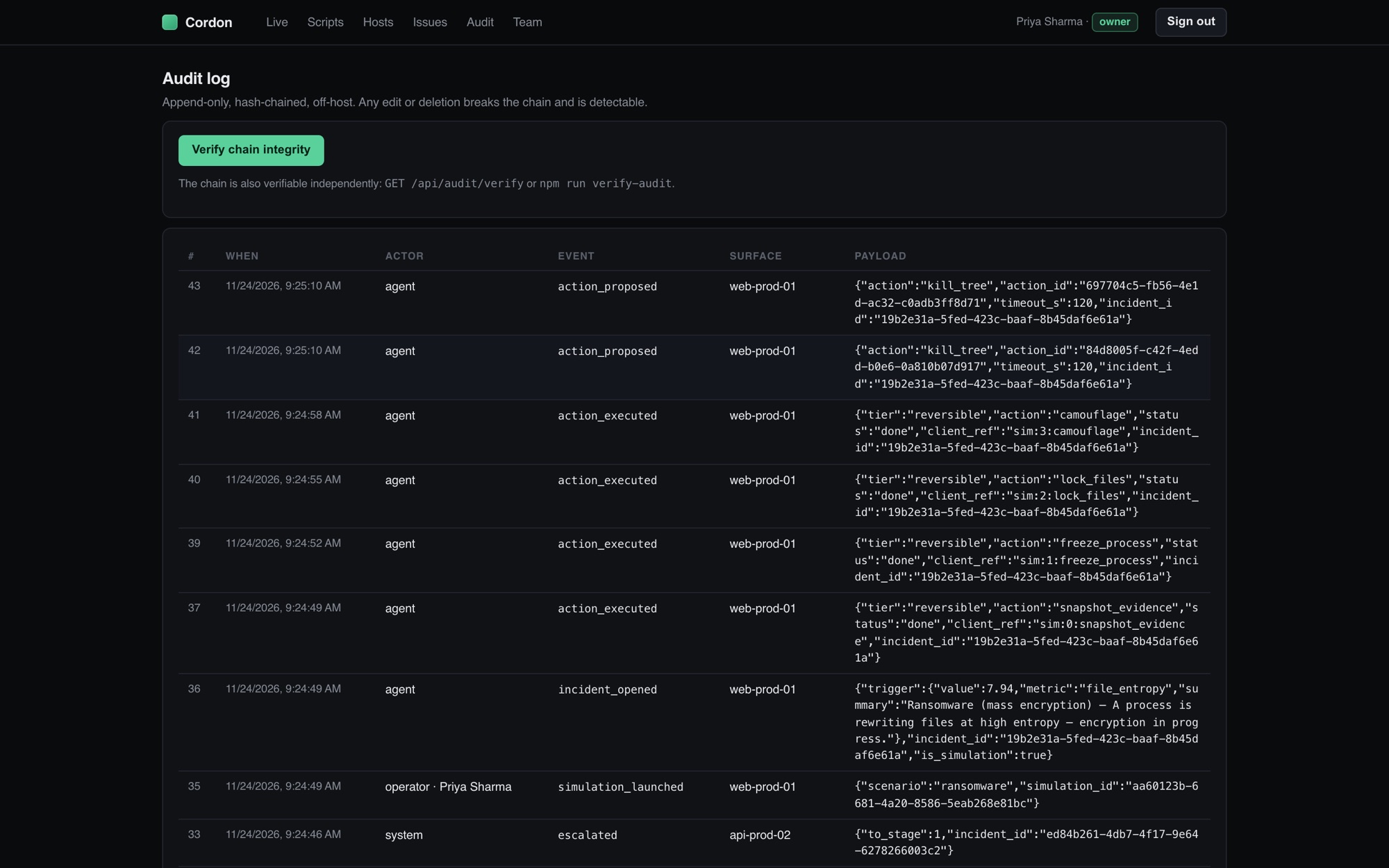
Every reading, decision and action goes into an append-only, hash-chained log that can be verified from the dashboard, the API or the command line.

Attack simulator

Drills for cryptojacking, ransomware, data and database exfiltration, fork bombs and reverse shells drive the real engine without killing anything.

Dependency-free agent

One Python 3 standard-library file per host, generated and enrolled from the dashboard, for Linux VMs and Kubernetes.

How it works

From start to done

  1. Generate an agent from the dashboard and run it on each server.

  2. The agent reports CPU, memory, disk, network, process, file-entropy and database signals against set thresholds.

  3. On a red line it contains the process locally and opens an incident that pages the escalation path.

  4. A responder approves or denies the destructive step; everything lands in the hash-chained audit log.

Works with

CentralPlinth

Signed in through Central, so the same people and permissions carry across.

Built on

Next.jsPostgresPython 3 agent
Next productToastmanYour team's API workspace, Postman collections included

Want Cordon working for your team?

We will show it on your own use case and how it joins the rest of the suite.

Talk to us