Prove every fraud trap actually fires
Trap Tester builds the traffic that should trip a ClearTrust trap, sends it to the pixel and keeps the verdict. Each test uses a real customer's macros from Casebook, every hit and its access-log line are stored, and a watcher drafts a test the moment engineering marks a trap live.
The problem
A trap marked live in a tracker is not proof it catches anything; QA checks are hand-built URLs in Postman with no record of what was sent or what the pixel said.
What it does
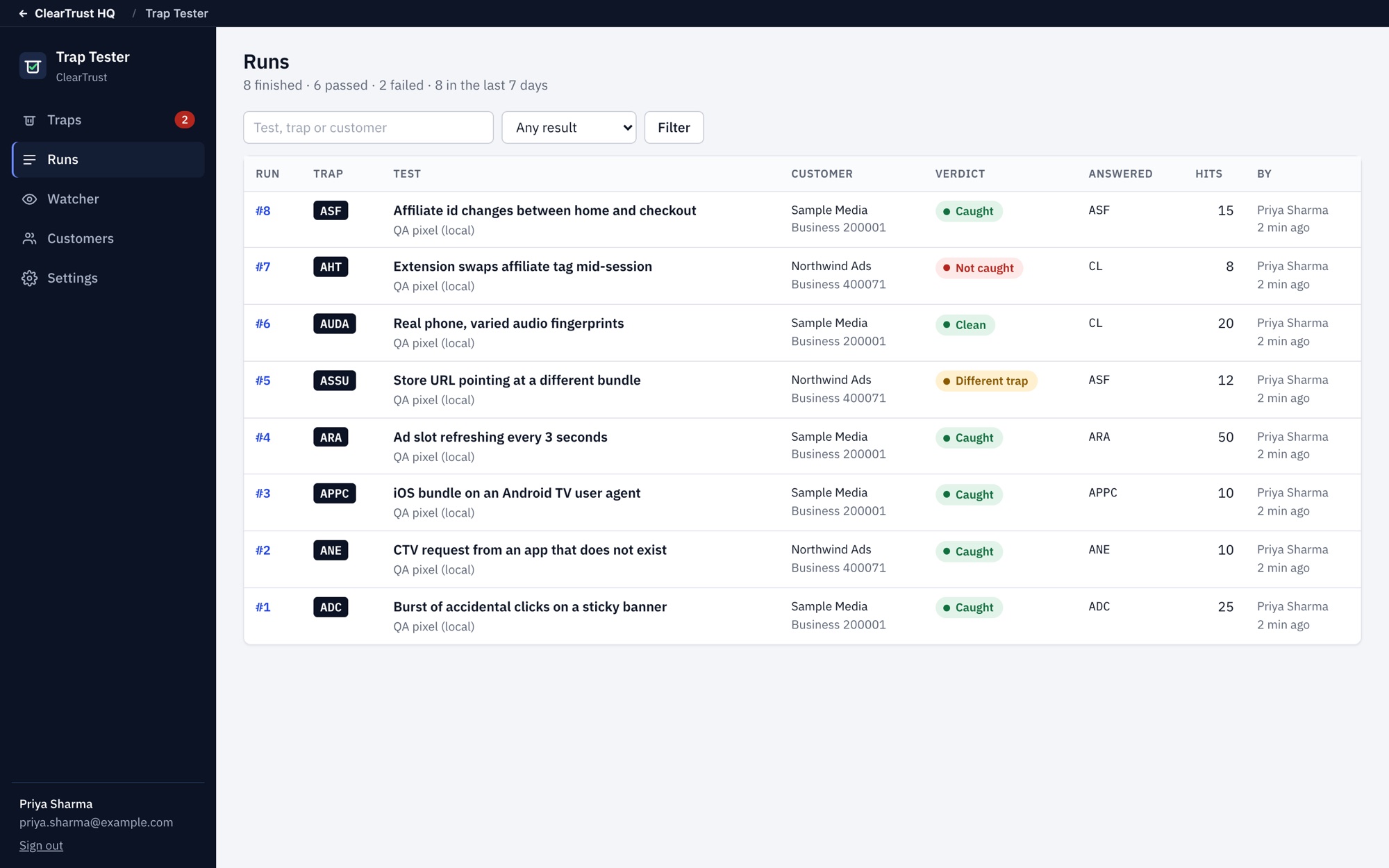
Traps come from TrapLab, Trap Tracker and Jeera tickets, or are typed in, all in one list with tested, passing and failing counts.
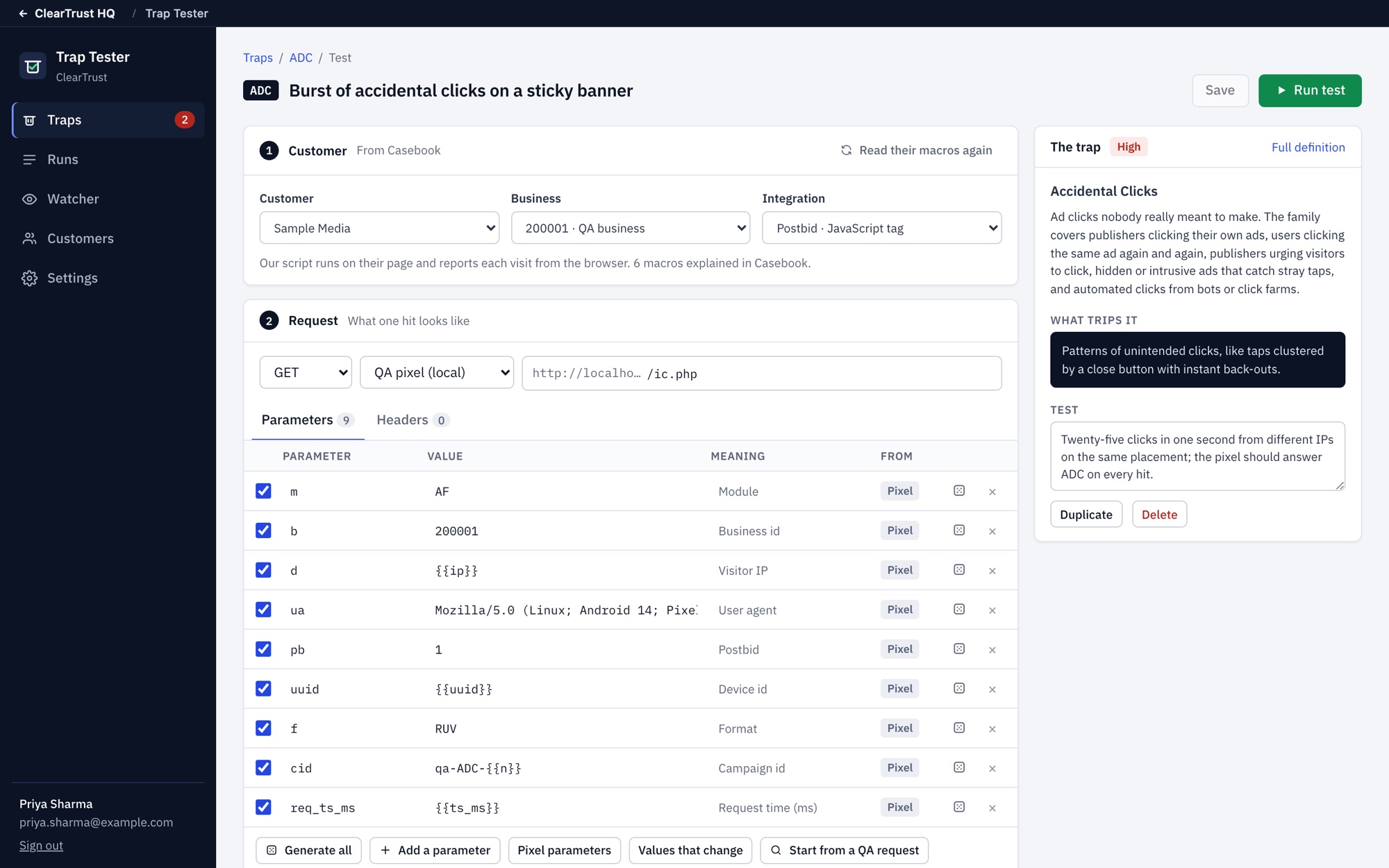
Parameters are filled from the customer's integration and macros in Casebook, so test traffic looks like that customer's real requests.
Placeholders such as {{uuid}}, {{ip}}, {{ts_ms}}, {{int:a-b}} and {{pick:a|b}} vary each hit, and the access log can be previewed or downloaded before sending.
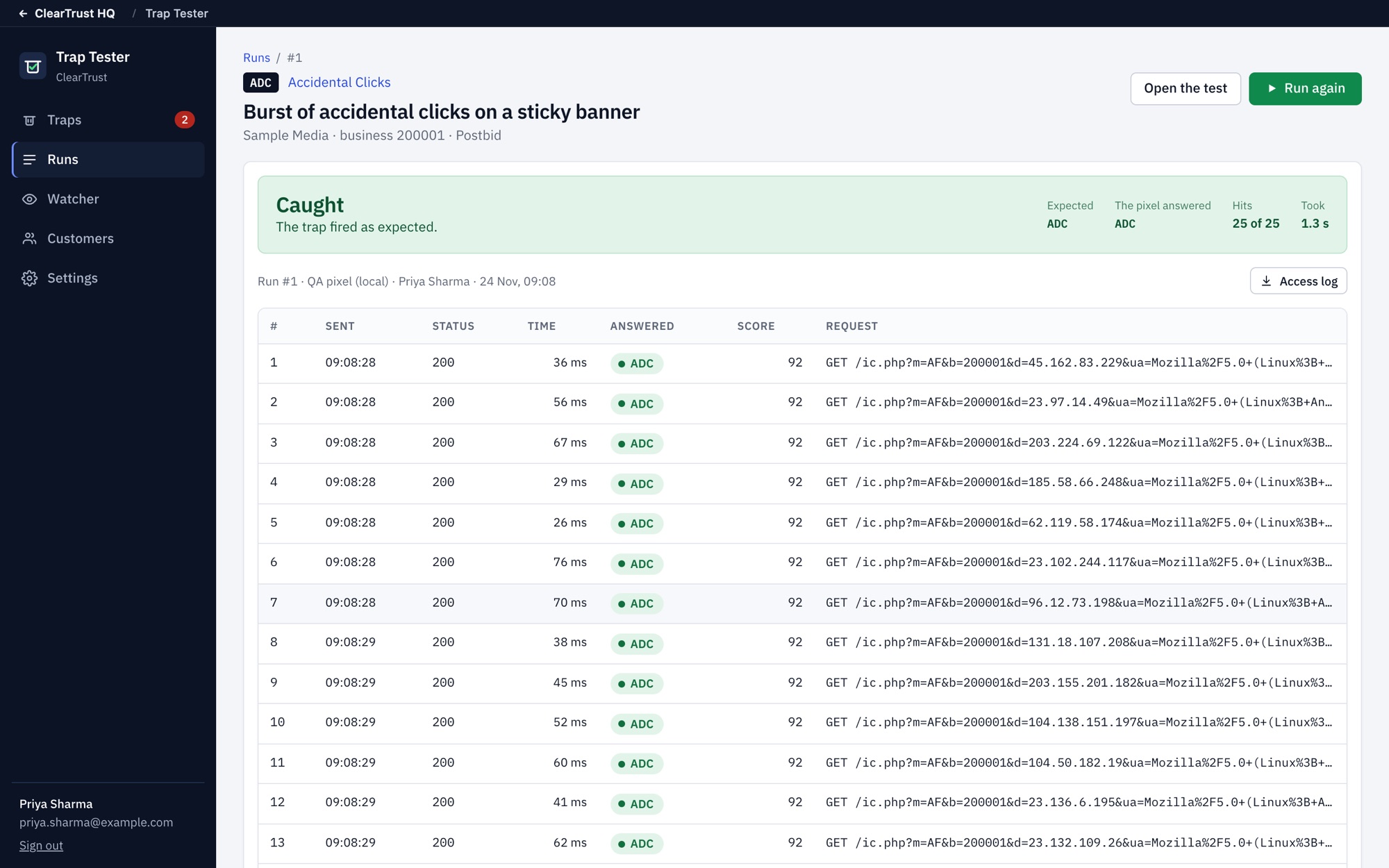
Each run reads the trap code in the pixel's answer and judges it Caught, Clean, Not caught or Different trap against what the test expects.
Status, timing, answer, score, request and combined-format log line are stored for every hit of every run.
Reads Trap Tracker on a timer and, when a trap goes live, adds it with a drafted test that expects the pixel to answer with its code.
How it works
Pick a trap and the customer, business and integration whose traffic to imitate.
Shape one request; values change per hit, and the access log previews before sending.
Run it against an approved environment such as the QA pixel.
Read the verdict and every hit; failures are emailed.
Signed in through Central, so the same people and permissions carry across.
An MCP endpoint lets agents list traps and tests, preview a test's access log, start runs, read results and check the watcher.
We will show it on your own use case and how it joins the rest of the suite.
Talk to us