Product and engineering agree every fraud trap
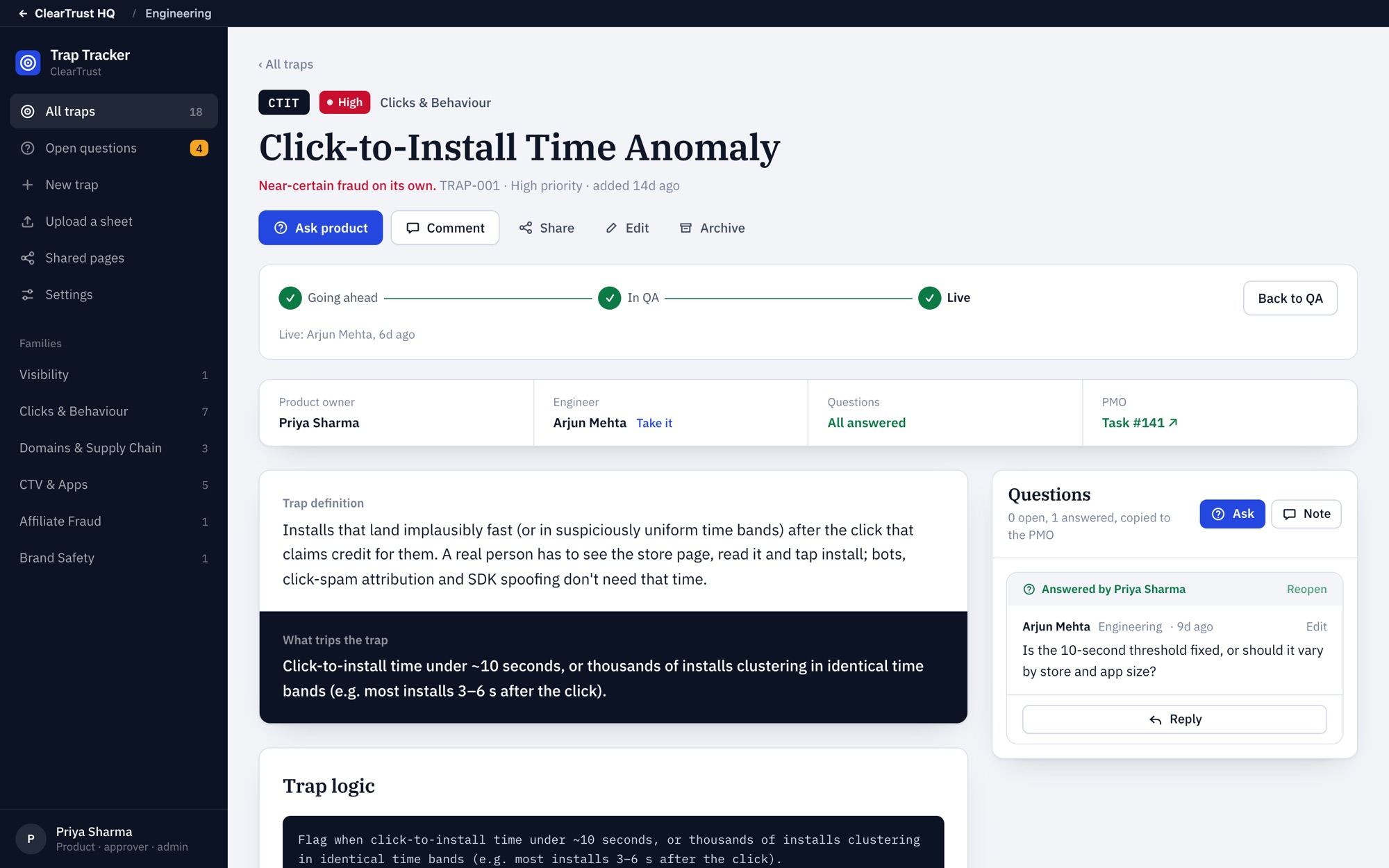
Trap Tracker is where product writes up each fraud-detection trap and engineering asks every question it needs before building it. Each trap is raised in one fixed format, gets a clear decision (going ahead, duplicate, not needed), moves through QA to live, and is handed to the PMO as a tracked task once its questions are settled.
The problem
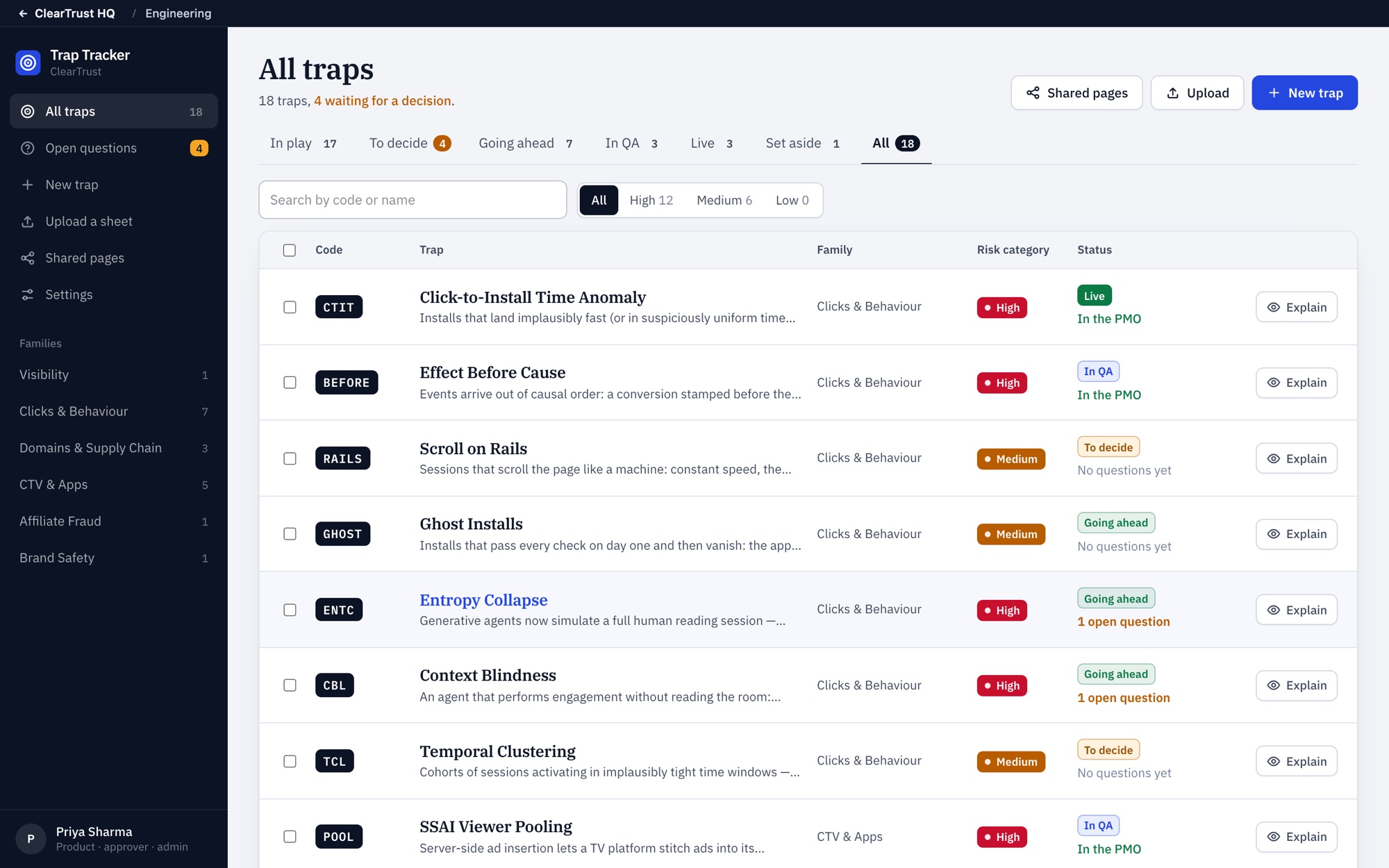
Detection ideas live in docs and chat threads, engineers build from half-answered specs, and nobody can say which traps are approved, in QA or live.
What it does
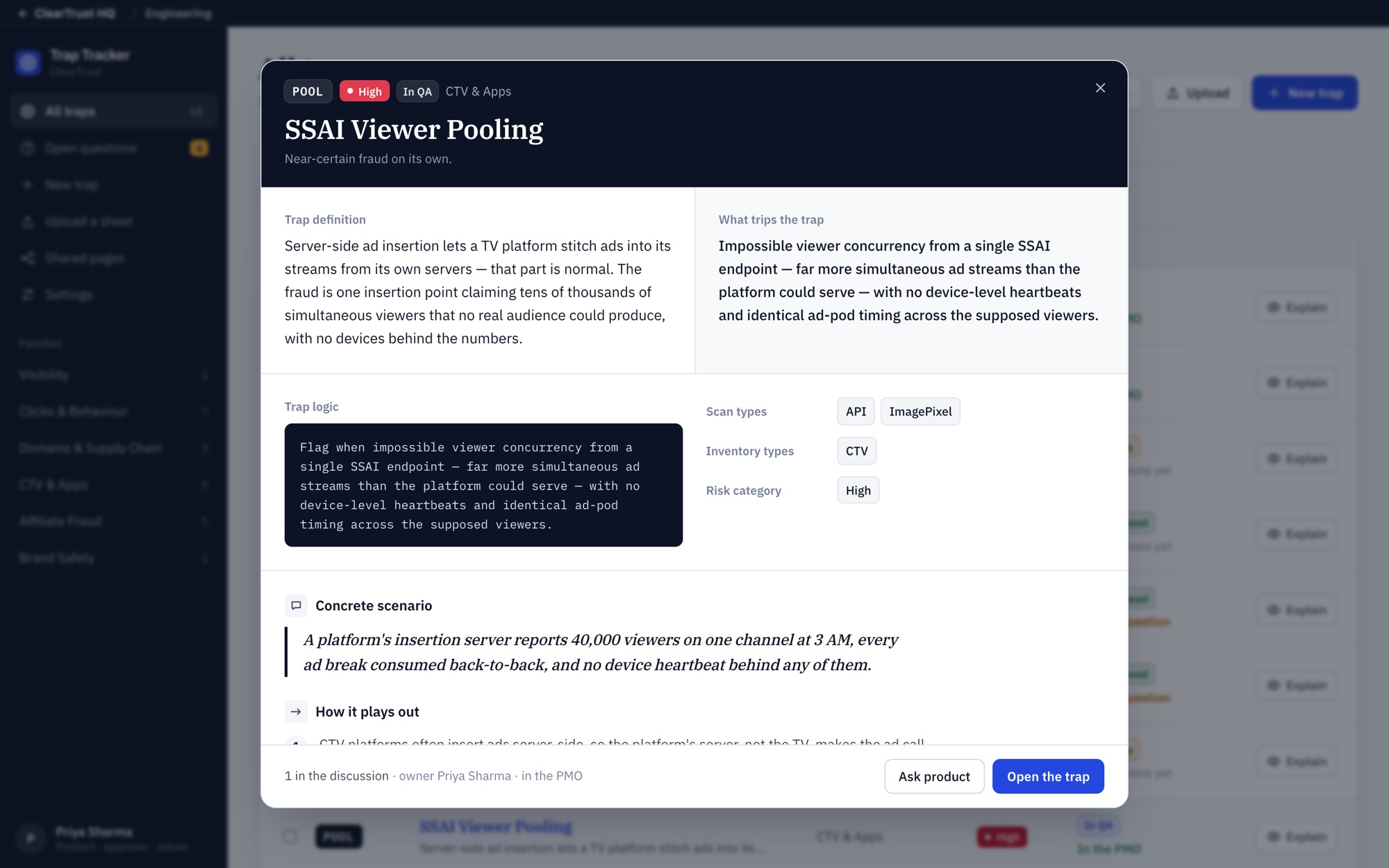
Every trap carries a code, definition, trap logic, scan types, inventory types and a high/medium/low risk category, and the app refuses one that is missing any of them.
Engineering asks, product answers, and a trap cannot be sent for tracking while any question is still open.
Product marks traps going ahead, duplicate or not needed; engineering moves them to QA and live, with emails to the right team at each step.
One button turns a settled trap into a PMO task carrying the definition and the agreed answers, kept in sync through a retrying outbox.
Public links show definitions only, take guest comments with abuse limits, and can expire or be turned off.
Product can load traps from a CSV or TSV sheet with a preview before anything is saved.
How it works
Product adds a trap (or uploads a sheet) in the standard format.
Engineering reads it and asks questions; product answers until all are settled.
Product decides go or set aside, then sends the trap to the PMO for tracking.
Engineering moves it to QA and marks it live; the PMO task follows.
We will show it on your own use case and how it joins the rest of the suite.
Talk to us